 |
CCCESD/CDDGC
Council of Chairs of Canadian Earth Science Departments
|
 |
|
|
CCCESD/CDDGC
Council of Chairs of Canadian Earth Science Departments
|
|
This page reports the survey of Canadian Earth Science departments from the calendar year 2008. In total, 36 schools responded for some part of this time frame. One school provided no data this year, and for it data from a previous year were carried forward. Full details of the response rate can be found on the page listing responses.
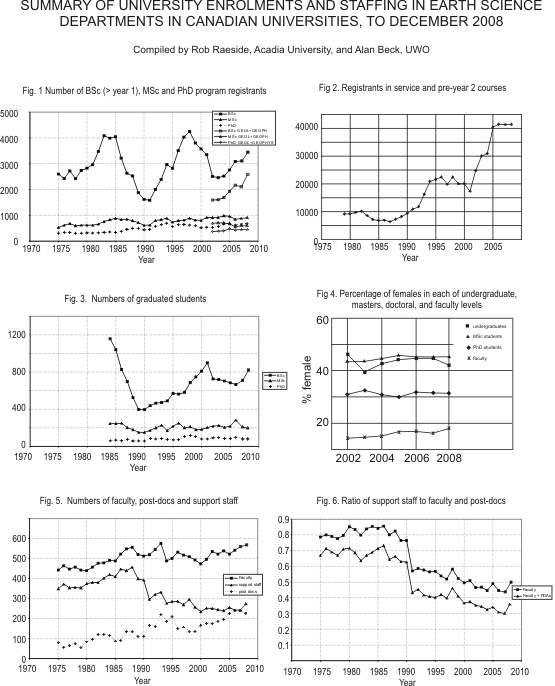
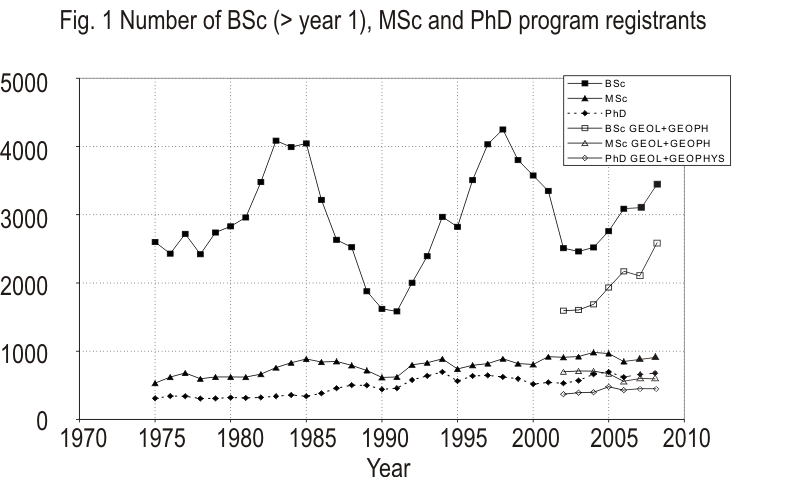
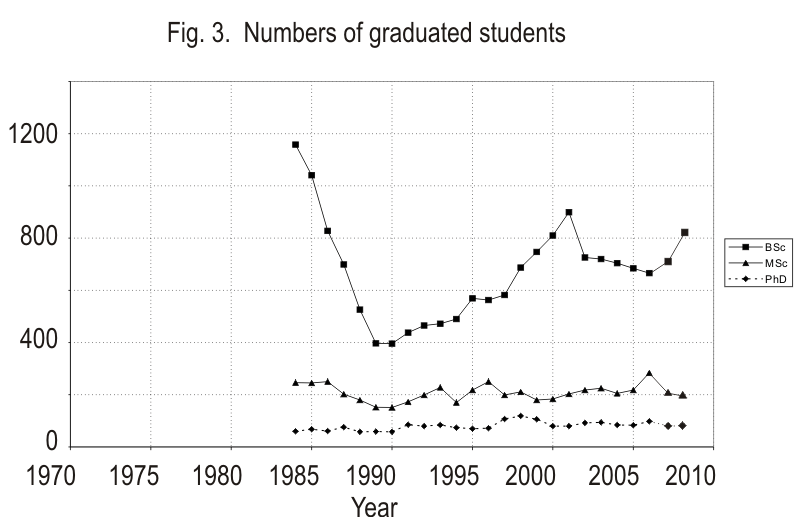
Figure 1 shows total undergraduate and graduate student enrolment. The steady rise in undergraduate program registrations from 2003 continues after a one-year pause in 2007, particularly in the Geology subset. Nationally, Canada has experienced an overall increase in undergraduate enrolments over the past 7 years, this year reversing a modest decline in the Atlantic Provinces, and doubling the enrolment since 2003 in both Ontario and the West. Quebec universities continue to have a slight decrease overall across the past seven years. The overall increase in enrolment from 2002-2007 is now clearly recorded in the graduation numbers, with a 17% increase over last year, and a 24% increase over the past two years (Figure 3).
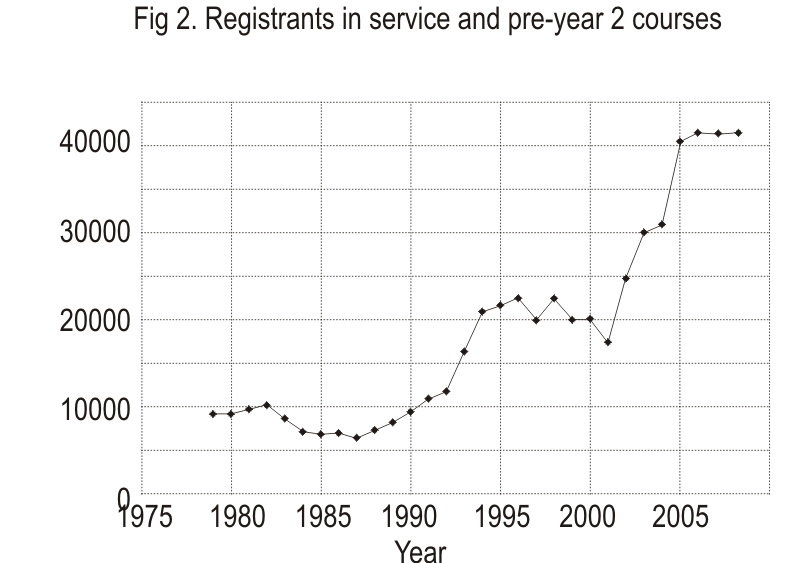
Numbers of first year and service course registrations, Figure 2 are increased dramatically from 2000-2005, but have now stabilized with 4 years in a row around 41000.
The number of registrations for graduate work (Figure 1) showed a modest increase to about 2005, followed by a drop in 2006 and a small increase in 2007, although the number of students enrolled in MSc programs in the Geology + Geophysics subset appears to have undergone a steady decline from 2002 to 2006, but has increased again in 2007. The large "graduating class" of PhD students in 2006 (Figure 3) produced in an overall drop in number of students registered in PhD programs, but this appears to have rebounded in 2007. The number of students graduating with MSc and PhD degrees (Figure 3) has declined in all geographic regions, but is close to levels of before 2006. There is no obvious correlation between enrolment in undergraduate programs and MSc or PhD registrations.
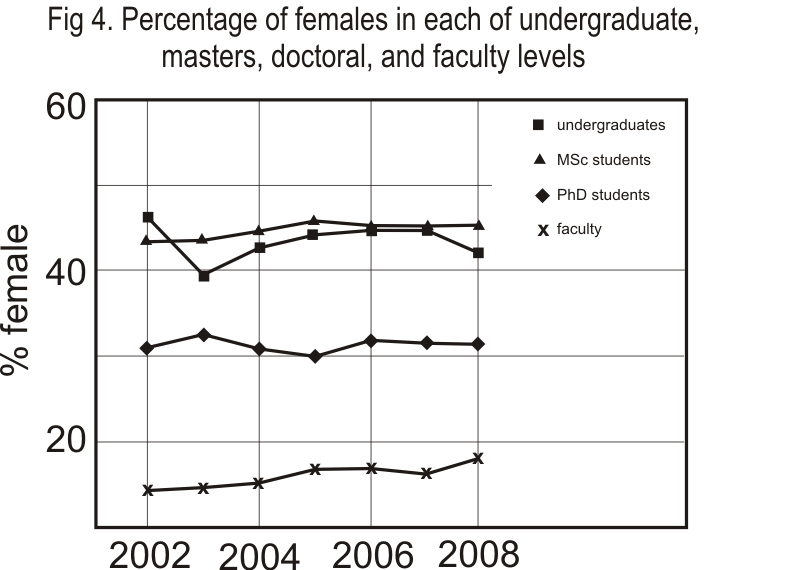
Figure 4 presents an analysis of the gender distributions over the past six years (data are not available for earlier timeframes) for undergraduate, masters and doctoral level graduate students and faculty cohorts. Women comprise approximately 45% of both the undergraduate and MSc levels, and this number appears relatively stable over 6 years. At the PhD level, the fraction of women is about 31% and in faculty positions, it drops to 16%.
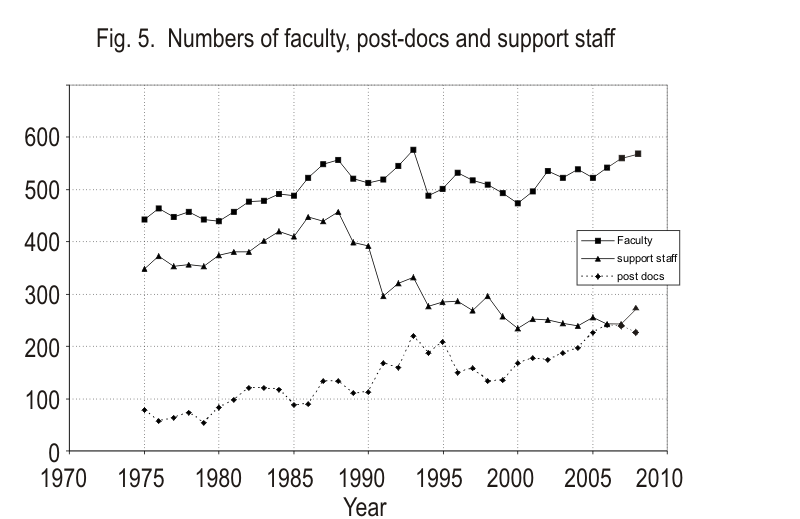
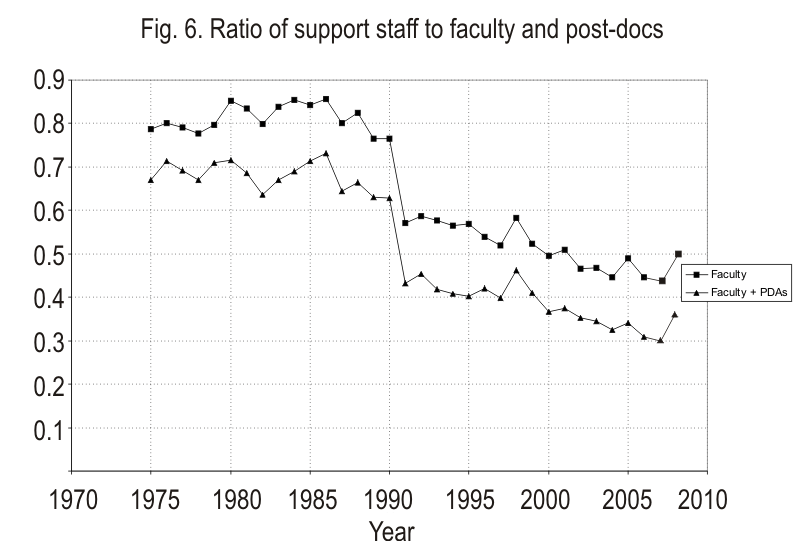
Numbers of faculty, Post-Doctoral Associates/Fellows, and support staff are shown on Figure 5
and Figure 6. Faculty numbers continue to
rise, to a
15-year high, the second highest value since records began. Faculty
numbers have now climbed 18% since 2000, likely primarily the result of CRC appointments. The steady decline of support staff
from 1988 to 2000 appears to have leveled off,
with small spike in the 2008 data, resulting from 15% increases in both Ontario
and the West. The ratio
of support staff to faculty has reversed a ten-year steady decline as a result
of the sharp increase in support staff in Ontario and the West. The number of post doctoral assistants
has dropped slightly having peaked after a steady 80% rise from 1998-2006.
Regional analysis by year: