 |
CCCESD/CDDGC
Council of Chairs of Canadian Earth Science Departments
|
 |
|
|
CCCESD/CDDGC
Council of Chairs of Canadian Earth Science Departments
|
|
This page reports the survey of Canadian Earth Science departments from the calendar year 2006. Data for the years 2002 to 2005 can be found at this link. All schools responded for some part of this time frame as shown on the page listing responses, and extrapolation has been limited to 4 schools only.
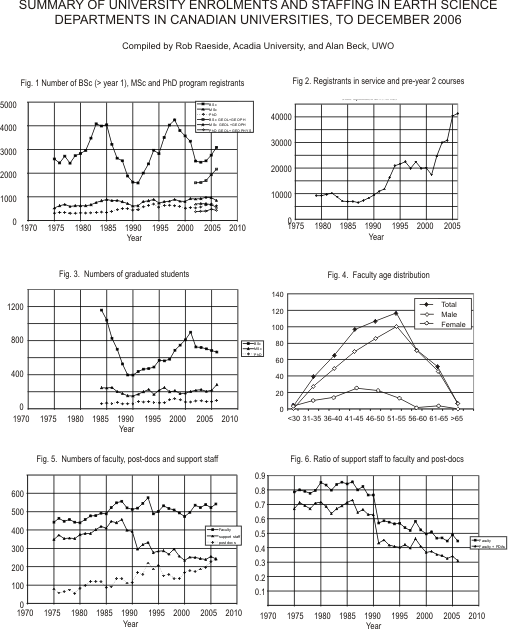
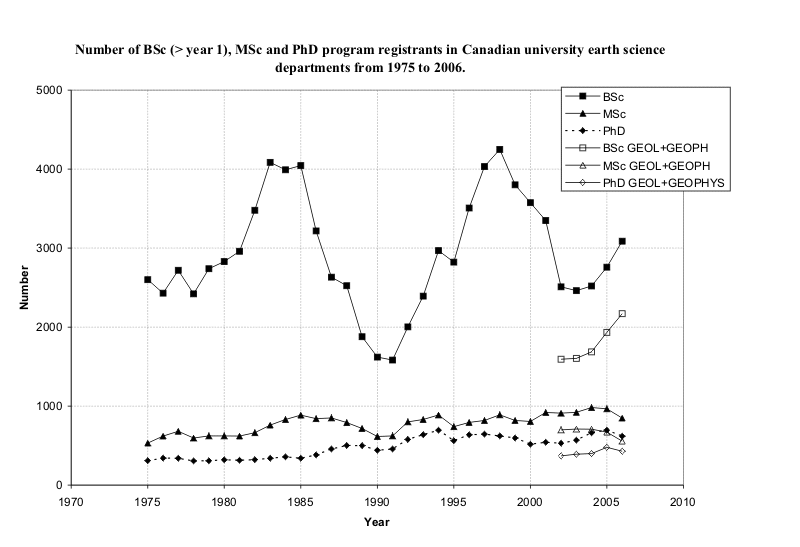
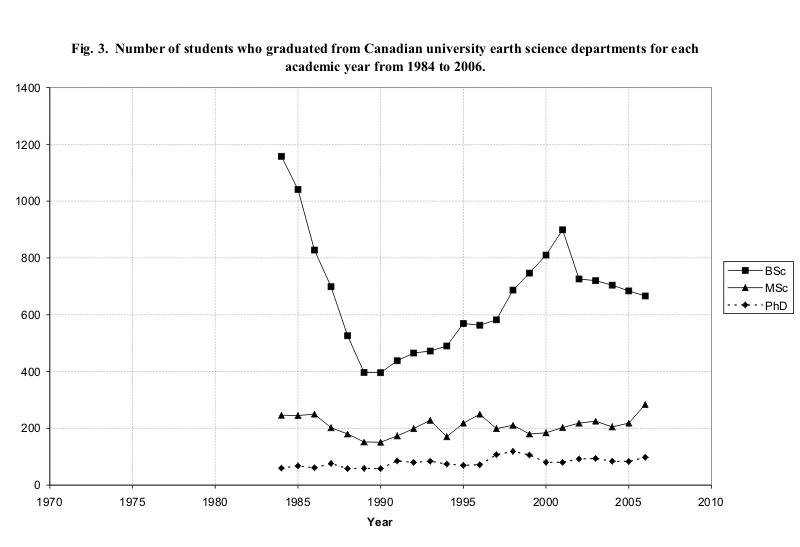
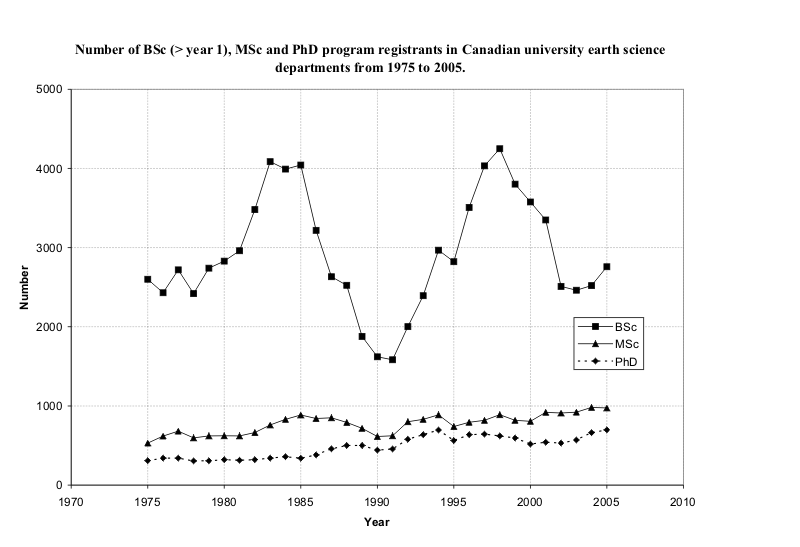
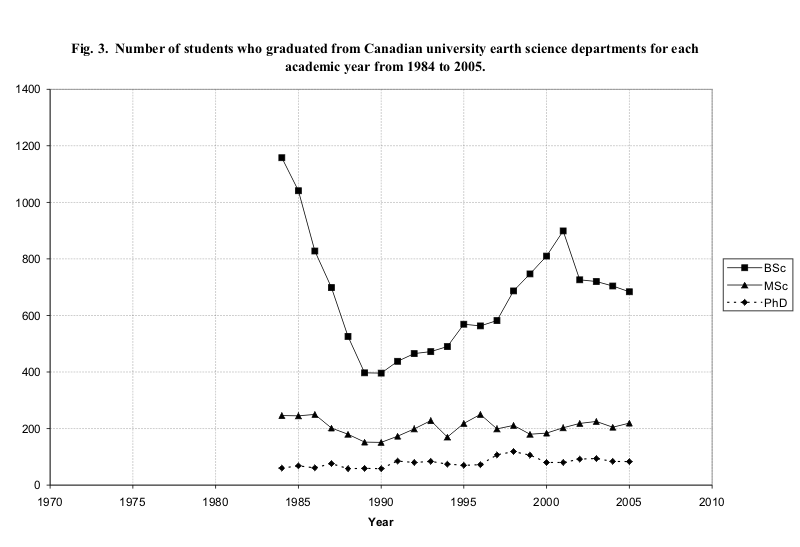
Figure 1 shows total undergraduate and graduate student enrolment. The downward trend in undergraduate program registrations from 1998-2003 bottomed out at about 60% of the peak values in the late 90's and has increased by about 25% since 2003, mainly as a result of increased enrolment in the West. Quebec has seen a decline in undergraduate enrolments since 2003. Considering only Geology/Earth Science majors (shown with unfilled symbols, i.e. excluding Env. Science, Atm. Science, Geophysics, etc.) the enrolment in undergraduate programs has increased significantly in 2004 to 2006 (35%). This increase appears to make up all the increase in total enrolments. The increase in enrolment, however, has yet to manifest itself in the graduation numbers. The 1990-2001 upward trend in BSc graduations appears to have dropped to about the 1998 level, and has declined about 8% since 2002.
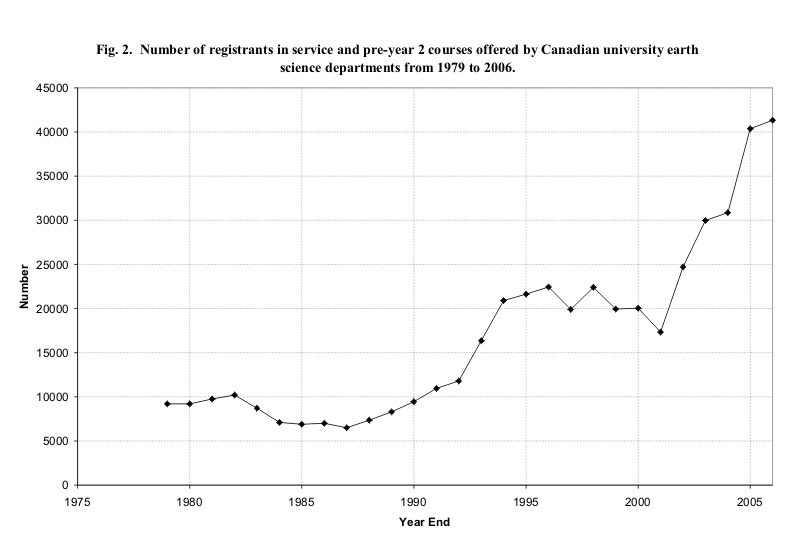
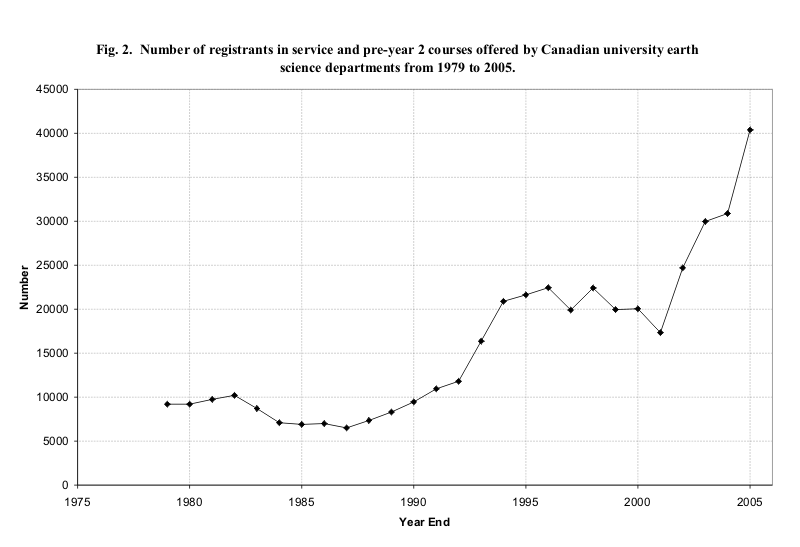
Numbers of first year and service course registrations, Figure 2 are increasing very rapidly again after a decade in the 20,000 range. This increase is most dramatic in Ontario in 2005, with a 66% increase in one year. This presumably represents the bulge from the double entry cohort in 2003 now seeking elective courses in science to complete degree programs.
The number of registrations for graduate work (Figure 1) showed a modest increase to about 2005. Of note is the 33% growth in PhD registrations from 2002-2005. In 2006, a particularly large number of graduations (Figure 3) appears to have resulted in an overall drop of students in program. There is no obvious correlation between enrolment in undergraduate programs and MSc or PhD registrations.
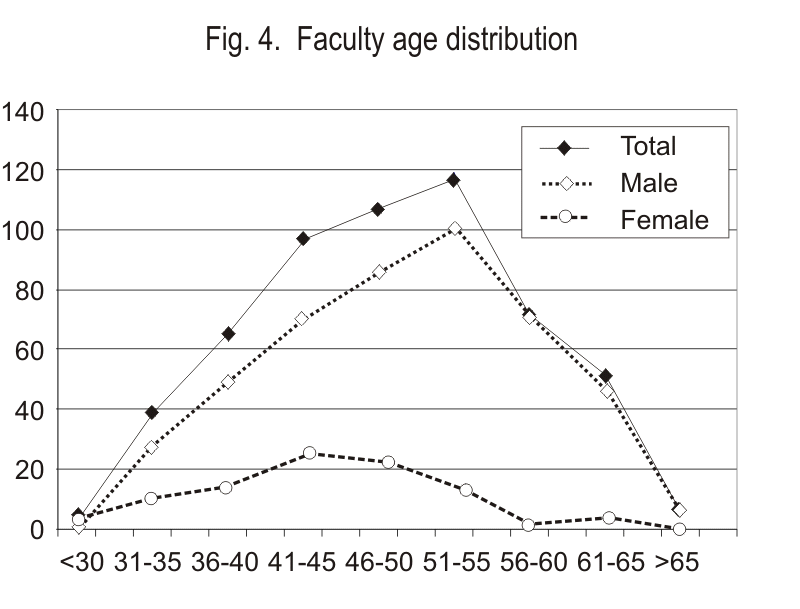
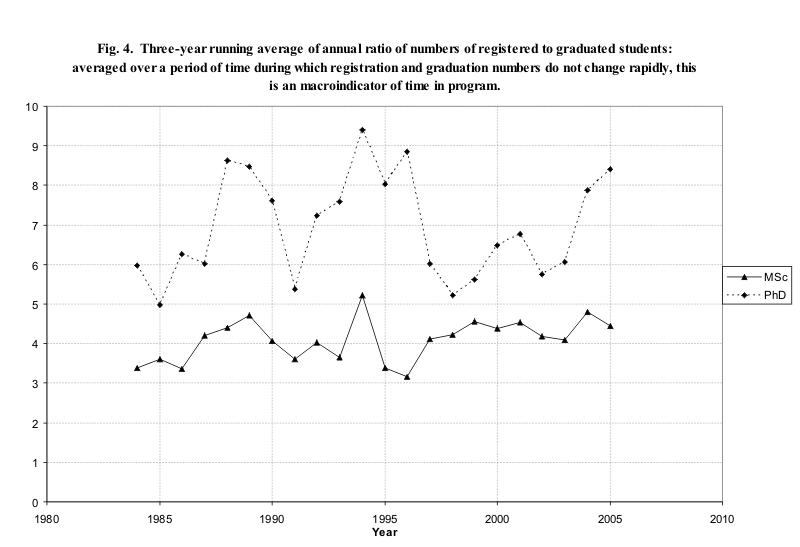
Figure 4 presents an analysis of the age distribution of university-paid faculty in Canada. The distribution reveals that 20% of the teaching faculty are 40 or under, 57% are in the age range 41-55, and 23% are over 55. The fraction of faculty that are women is almost 18%, and their broad age distribution is 30% aged 40 and under, 63% age 41-55 and 7% over 55.
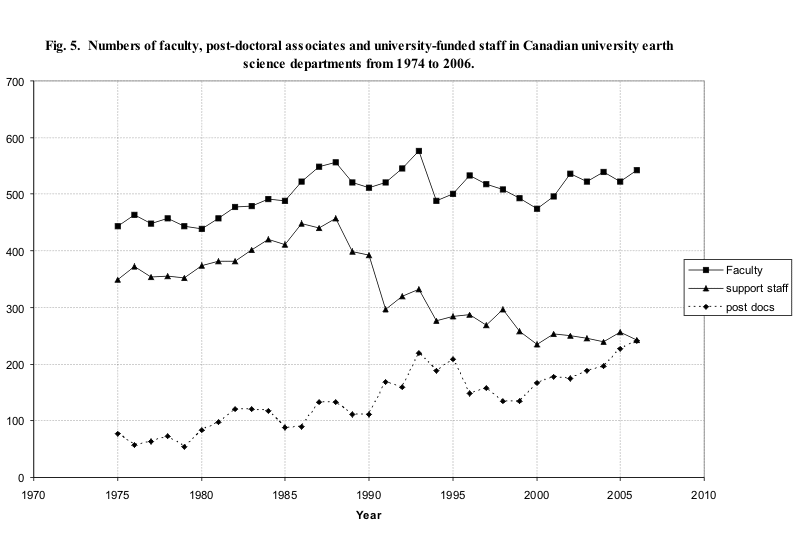
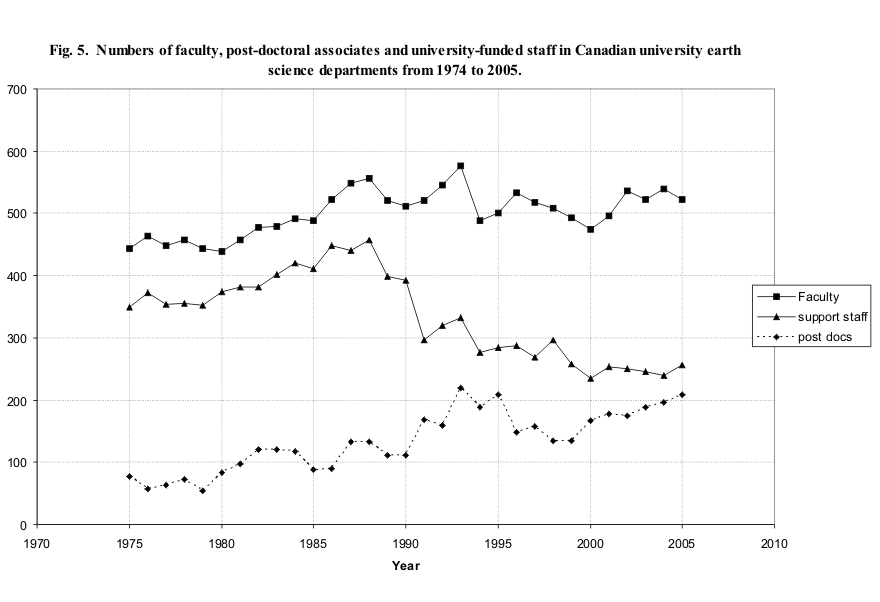
Numbers of faculty, Post-Doctoral Associates/Fellows, and support staff are shown on Figure 5
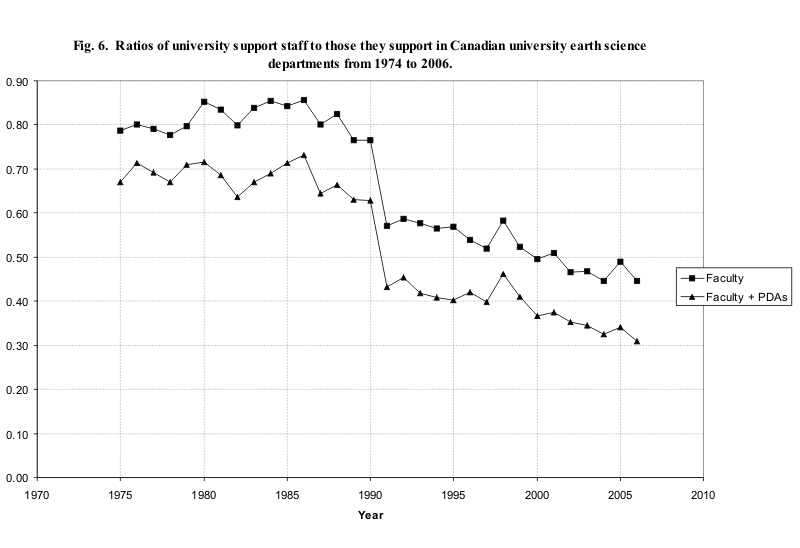
and Figure 6. Faculty numbers are level over the past
5 years, after a 10% climb from 2000 to 2002 which might have been the result of CRC appointments. If so, more recent appointments have been balanced by losses elsewhere. The steady decline of support staff from 1988 to 2000 appears to have leveled off, while the number of post doctoral assistants is showing a steady rise with a
80% increase since 1998. The ratio of support staff to faculty continues a steady decline,
albeit with a temporary spike in 2005 as a result of appointments of technicians in Ontario and the West.
Regional analysis by year: